
Digital design standards shift quickly, making classic UX texts more vital than ever for digital creators. I have read through countless buyer reviews and compared the top editions to see how they truly hold up. In my view, understanding these foundational principles matters more now than ever. Let me guide you through an honest, ranked comparison of the best choices available.
1. Don't Make Me Think: A Common Sense Approach to Web Usability, 2nd Edition

This book earned its specific ranking because of its straightforward older text that appeals directly to retro design enthusiasts. I find that its historical perspective offers a fascinating look at early internet usability.
The main drawback is that much of the technical advice feels outdated for modern mobile applications. Still, the core common sense principles remain remarkably solid for historical context.
Buyers note that the second edition serves as a useful historical artifact for design history buffs.
Reviewers mention the text lacks coverage of contemporary mobile touch interfaces.
Readers appreciate the clear layout despite the older publication date.
Get It From Amazon Now: Check Price on Amazon & FREE Returns
2. Don't Make Me Think! A Common Sense Approach to Web Usability

This version is best for collectors and traditional print enthusiasts who prefer holding an original physical copy. I think there is a distinct charm in owning the exact volume that shaped early web standards.
The physical condition of these used copies can vary widely from seller to seller. You might encounter worn covers or highlighted pages if you are not careful.
Customers frequently mention the good physical condition of these used vintage prints.
Buyers note the binding holds up well for a pre-owned book.
Reviewers state the content remains timeless despite the vintage paper quality.
Get It From Amazon Now: Check Price on Amazon & FREE Returns
3. The Design of Everyday Things: Revised and Expanded Edition

An interesting feature of this volume is how it shifts focus from websites to physical hardware objects, then broadens out to general cognitive psychology. I consider this a brilliant companion read for any digital creator wanting to understand human error.
The dense academic prose might slow down readers who just want quick web design tips. However, the universal design laws inside are worth the extra effort.
Buyers highlight the clean, defect-free product condition upon arrival.
Reviewers appreciate the proper binding that survives frequent reading sessions.
Customers note the text provides profound insights into everyday product flaws.
Get It From Amazon Now: Check Price on Amazon & FREE Returns
4. Dont Make Me Think by Steve Krug (2014-10-01)
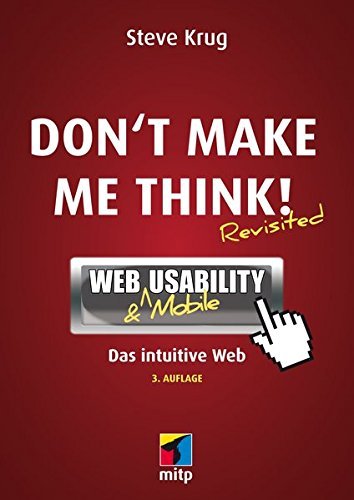
The most common buyer complaint about this printing is its flimsy cover material that tends to curl at the edges. I think the balanced picture is that the interior content remains identical to other standard paperbacks.
This specific copy works well as a budget desk reference for students on a tight allowance. Just do not expect museum-quality paper stock.
Buyers report that the cover corners bend easily during daily transit.
Reviewers mention the affordability makes it an accessible classroom purchase.
Customers note the print contrast inside is sharp and easy to read.
Get It From Amazon Now: Check Price on Amazon & FREE Returns
5. Don't Make Me Think, Revisited: A Common Sense Approach to Web Usability (3rd Edition) (Voices That Matter)

Compared to the 2014 paperback listed just above, this third edition refines the core examples for modern web usability. I rank this as the absolute best version for everyday practitioners working on contemporary sites.
The main limitation is that web standards evolve even faster than this revision cycle. Yet, the underlying psychological truths make it my top overall recommendation.
Buyers praise the updated examples covering modern mobile web design.
Reviewers consistently rate this edition as the most practical for daily UX work.
Customers highlight the clarity of the updated illustrations and diagrams.
Get It From Amazon Now: Check Price on Amazon & FREE Returns
6. Don't Make Me Think, rev 4: A Common Sense Approach to UX Research and Design (Voices That Matter)

This revision became popular thanks to its reputation for tackling advanced UX research, but I think it stretches the original philosophy a bit thin. The added material tries to cover too many modern enterprise topics at once.
Readers looking for the punchy brevity of the original might find this version slightly bloated. Even so, the analytical depth rewards patient readers.
Buyers note the expanded chapters require more time to digest than earlier editions.
Reviewers appreciate the deeper dive into modern research methodologies.
Customers observe that the book bridges classic web design and modern data analytics.
Get It From Amazon Now: Check Price on Amazon & FREE Returns
7. Don't Make Me Think, Revisited: A Common Sense Approach to Web Usability (3rd Edition)

This edition earned its place because of its comprehensive third edition updates that bridge the gap between desktop and mobile. I appreciate how it maintains the witty, conversational tone of the original work.
The primary drawback is its redundancy if you already own other printings of the third edition. It is essentially a twin to my top pick, just without the specific series branding.
Buyers state the content is identical in quality to other third-edition print runs.
Reviewers mention the paperback binding is sturdy enough for office environments.
Customers find the examples highly relevant to modern digital product teams.
Get It From Amazon Now: Check Price on Amazon & FREE Returns
8. Don't Make Me Think, But Don't Think For Me: The Joys and Horrors of AI Design

This book is best for AI design students who need to understand automation ethics. I find its focus on machine learning interfaces a fascinating departure from traditional GUI design.
Some readers might find the title a bit misleading since it diverges sharply from Krug's original methodology. It reads more like an academic critique than a practical handbook.
Buyers note the text offers a unique perspective on automated decision-making.
Reviewers point out the heavy focus on artificial intelligence ethics.
Customers recommend it primarily for specialized computer science coursework.
Get It From Amazon Now: Check Price on Amazon & FREE Returns
9. Don't make me think! – Web Usability: Das intuitive Web (German Edition)

An interesting feature of this translation is its clever adaptation of English idioms into natural German UX terminology, then widening out to European web standards. I think foreign-language buyers will appreciate the careful localization effort.
The regional design examples may not fully align with American web traffic patterns. However, the foundational cognitive rules translate perfectly across borders.
Buyers praise the high quality of the German language localization.
Reviewers note the technical terms are translated accurately for local developers.
Customers find the regional examples helpful for European market projects.
Get It From Amazon Now: Check Price on Amazon & FREE Returns
10. Don't Change Them; Grow Them: The 8-Minute Coaching Guide to Activate the Growth Potential in Any Personality Type, Leader, Family, and Team

The most common buyer complaint about this guide is that it targets team coaching rather than website design. I believe the balanced picture is that it offers brilliant interpersonal frameworks once you look past the unrelated title.
This manual works well as an eight-minute coaching tool for leaders managing diverse personality types. Just do not expect any web usability advice inside the chapters.
Buyers mention the leadership exercises take very little time to implement.
Reviewers caution that the content focuses on management rather than digital UX.
Customers highlight the practical value of its personality growth frameworks.
Get It From Amazon Now: Check Price on Amazon & FREE Returns
Choosing Between Them
When sorting through these options, I suggest matching Don't Make Me Think, Revisited (3rd Edition) to anyone seeking standard web usability principles. For specialized needs, foreign readers should grab the German Edition, while hardware fans will prefer the insights of The Design of Everyday Things.
The main category-wide caveat is that redundant editions and translations flood the market, meaning you should double-check the publication year before purchasing. Sorting through these duplicates ensures you secure the exact foundational design wisdom you need for your projects.
As an Amazon Associate, this site earns from qualifying purchases. Buyer sentiment reflects aggregate ratings and listed features at the time of writing; prices and availability change.
