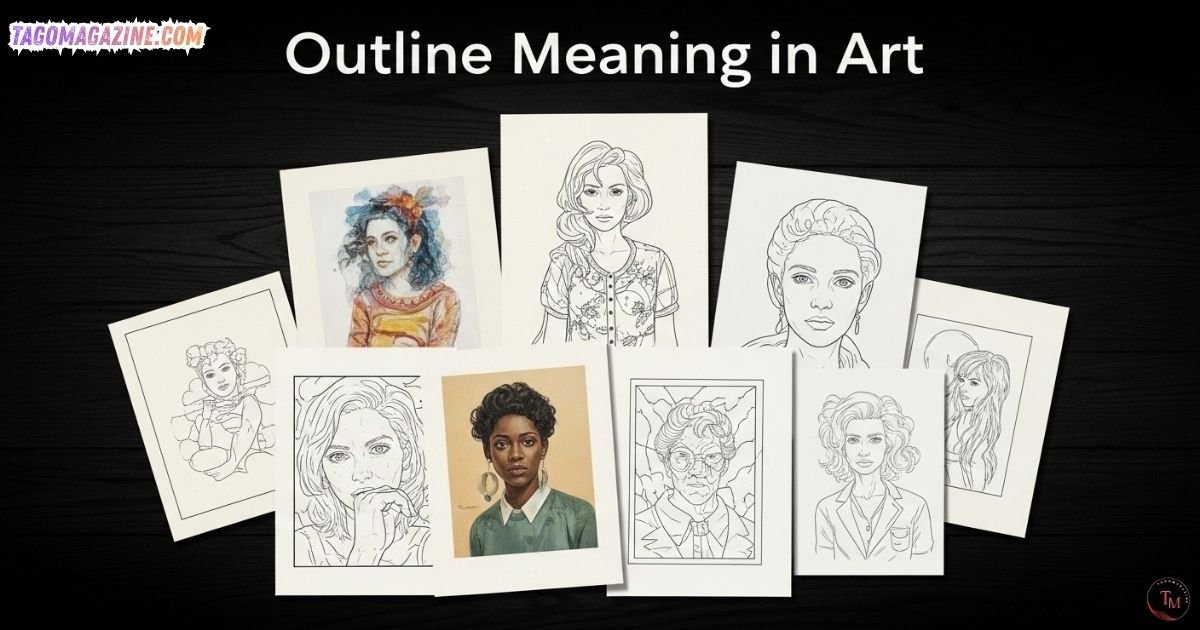
If you’ve ever tried drawing, you already know one thing—nothing starts without a line. The outline meaning in art is one of those simple ideas that feels basic at first, but honestly, it’s doing a lot more work than people realize. It shapes everything you see on paper or screen. Without it, most artwork would just feel… messy and unclear.
In simple terms, an outline is the outer boundary that defines a shape or object. But there’s more to it. It guides structure, controls proportion, and sets the stage for shading, texture, and detail. Whether you’re sketching casually or working on professional digital art, mastering outlines is kind of non-negotiable.
What Is an Outline in Art? (Simple Definition)
An outline in art is a line that marks the outer edge of a shape, object, or figure. It defines the structure without adding color or texture.
This means the outline → defines → shape and form. That relationship is the core of drawing. Without outlines, objects lose clarity and become hard to recognize, which is why even the most advanced artists still rely on them.
Outlines are usually the first step in drawing. Artists create a preliminary sketch using light lines, then refine those into cleaner outlines. These lines act as a visual guide, helping maintain proportions and placement. It’s not always perfect, and yeah sometimes lines go shaky, but that’s part of the learning curve.
Why Outlines Matter in Drawing and Painting
Outlines are not just beginner tools. They’re actually essential across all levels of art, from basic sketching to advanced digital illustration.
First, outlines bring visual clarity. When you define the outer edge of a shape, the viewer instantly understands what they’re looking at. Second, outlines help organize composition. Artists often plan their artwork using outlines before adding shading or textures, so everything stays structured.
Also, outlines support proportion and structure. If your outline is off, the whole drawing feels weird, even if shading is perfect. That’s why many artists spend more time refining outlines than anything else. It might sound boring, but it really pays off.
Types of Outlines in Art
There are different types of outlines depending on style and purpose. Each one has its own role, and honestly, experimenting with them can change your entire drawing style.
Common Types of Outline Styles
| Type | Description | Example Use |
|---|---|---|
| Continuous Outline | One unbroken line | Drawing a leaf in one stroke |
| Contour Line | Shows outer + inner details | Sketching a human face |
| Implied Line | Suggests edges with gaps | Clouds or smoke |
| Bold Outline | Thick and strong lines | Comic characters |
| Thin Outline | Light and delicate | Botanical drawings |
Each of these plays a different role. For example, bold outlines → enhance → visual emphasis, which is why comics use them so much. On the other hand, thin outlines feel more subtle and realistic.
Outline vs Contour Line (Important Difference)
An outline shows only the outer edge of a shape, while a contour line includes both outer edges and inner details.
This means contour line → includes → inner and outer details. It’s a slightly more advanced technique because it captures depth and structure within the object, not just the boundary.
Many beginners confuse the two, and that’s totally normal. Just remember:
- Outline = outside only
- Contour = outside + inside
Once you get that, things start making more sense in drawing.
History of Outline in Art
Outlines have been around for thousands of years, and honestly, they’re one of the oldest techniques in art.
In ancient times, early humans used simple outlines in cave paintings to represent animals and people. These shapes were basic but effective. Later, in classical civilizations like Greece and Rome, outlines became more refined and were used in sculptures and pottery.
During the medieval period, outlines were used in manuscripts to make figures more visible. Fast forward to modern times, and outlines are everywhere—from cartoons to logos and even digital interfaces.
So yeah, outline → used in → art history across eras. It’s not going anywhere.
Real-Life Examples of Outlines in Action
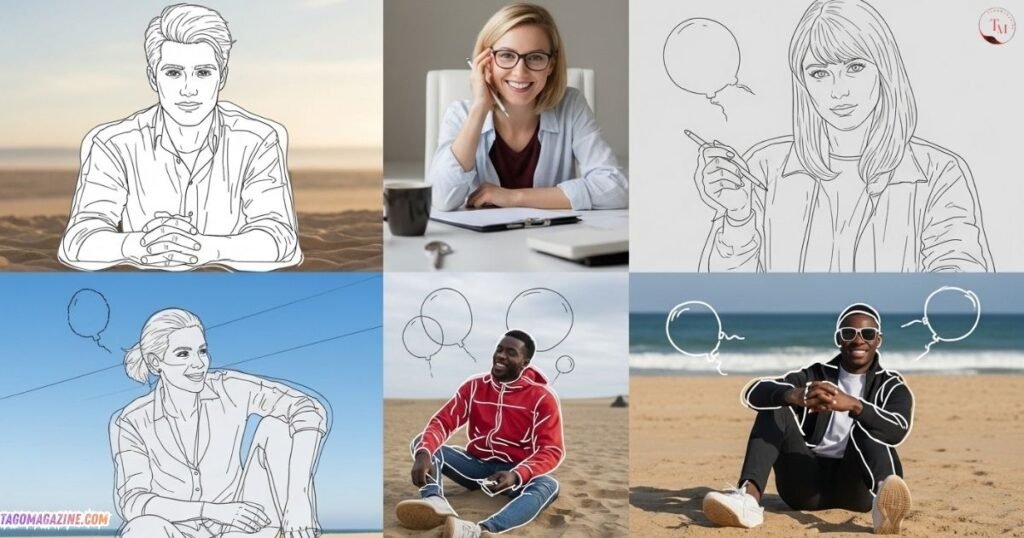
Understanding theory is good, but seeing outlines in real situations makes things clearer.
For example, when a student draws a flower, they usually start with a light pencil outline. This helps define petals before coloring. In cartoons, artists use bold outlines to make characters pop, making them instantly recognizable.
In portrait drawing, soft contour lines help define facial features like the nose and lips before shading begins. These examples show how outlines guide the entire creative process.
How Outlines Are Used in Modern Art (2026)
Outlines are not just for traditional drawing anymore. They’re heavily used in digital art, graphic design, and even social media content.
Key Modern Uses
- Digital Art & Illustration
Artists use apps like Procreate and Illustrator to create clean, scalable outlines.
So basically, digital tools → utilize → clean outline techniques - Graphic Design
Logos and icons rely on bold outlines for clarity and recognition. - Animation
Characters in animation are defined by consistent outlines, which helps maintain identity across frames. - Social Media Art
Quick sketches and reels often highlight outlines first, making content visually engaging.
Outlines today are more versatile than ever, and yeah, they’re still evolving.
Step-by-Step Workflow: From Sketch to Final Artwork
This is where most beginner guides fall short. They tell you what outlines are, but not how to actually use them properly. So here’s a simple workflow.
Drawing Process Using Outlines
- Start with light sketch lines
- Refine the shape using clean outlines
- Adjust proportions and fix mistakes
- Add contour lines for inner details
- Apply shading and textures
This process works for both traditional and digital art. The key is not rushing. Many beginners jump straight to shading, but skipping outline refinement leads to messy results.
Advanced Outline Techniques (Pro-Level Insights)
This is something most basic guides don’t explain well.
Line Weight Variation
Line weight refers to thickness variation in outlines. Thicker lines highlight important areas, while thinner lines add subtle detail. This creates depth and focus.
Gesture Drawing
Gesture drawing uses quick outlines to capture movement and flow. It’s less about precision and more about energy.
Stylized Inking
Artists often develop unique outline styles. Some use exaggerated thick lines, others prefer sketchy or broken lines. This adds personality to the artwork.
These techniques separate beginner work from professional-level art. It takes practice, but it’s worth it.
Common Mistakes to Avoid
Even though outlines seem simple, beginners often mess up in predictable ways.
- Over-relying on outlines without shading makes art look flat
- Using uneven or shaky lines reduces quality
- Ignoring proportions leads to distorted shapes
- Confusing contour with outline creates confusion
Fixing these issues early helps a lot. Just practice steady hand control and observe real objects closely.
Tips to Improve Your Outlines
If you want better outlines, focus on control and consistency.
- Start with light strokes, don’t press too hard
- Practice continuous lines to build confidence
- Use references to improve accuracy
- Experiment with line thickness
Also, don’t stress too much about perfection. Even messy lines can look good if they’re confident.
When to Use Outlines (And When Not To)
Outlines are useful, but not always necessary.
Use outlines when you need clarity, structure, or stylization. Avoid heavy outlines in hyper-realistic art where subtle transitions matter more.
Some artists completely skip outlines and work directly with shapes and tones. That’s advanced stuff though, so beginners should stick with outlines first.
FAQ Section
What is the outline meaning in art?
An outline in art is a line that defines the outer edge of a shape or object. It helps create structure and clarity before adding details like shading or color, making the subject easily recognizable and visually organized.
What is the difference between outline and contour?
An outline shows only the outer boundary of a shape, while a contour includes both outer edges and internal details. Contour lines provide more depth and structure, making them slightly more advanced than simple outlines.
Are outlines only used by beginners?
No, outlines are used by both beginners and professionals. While beginners use them to learn structure, professionals use outlines for style, clarity, and digital illustration. They remain essential in many modern art forms and design processes.
Can outlines be colored or stylized?
Yes, outlines can be black, colored, thick, thin, or even textured. Many artists use stylized outlines to create unique visual effects, especially in cartoons, graphic design, and digital artwork.

Tonyjames is an expert blogger specializing in grammar, helping readers write with clarity and confidence. With a keen eye for detail and a passion for language, he simplifies complex rules into practical tips you can apply every day to improve your writing skills.