

Bridging old-school gauges and modern networks can feel like translating ancient poetry into digital code, especially when you weigh budget analog converters against high-end marine hubs. After analyzing extensive buyer feedback and technical specs, I have built this ranked comparison to separate the reliable signal translators from the frustrating impulse buys. My goal is simple: save your weekend from wiring headaches.
1. MarineNow CX5106 NMEA2000 Converter, 0-190 Ohm, Up to 13 Sensors | Single-Channel,Waterproof,9-32V DC Compatible with Fuel Oil Pressure Temp RPM Trim Sensors,Marine Boat Signal Transfer Module

This single-channel unit earned its spot on my list because of its specialized focus on dedicated signal routing, making it a smart choice when you only need to translate one stubborn gauge. I like that it avoids overcomplicating things, keeping the installation footprint small for tight dash spaces.
The 0 to 190 Ohm range handles common fuel and temperature senders quite well. But I should note that its single-channel limit means you will need multiple boxes if you are modernizing an entire instrument cluster.
Buyers looking for a straightforward single-gauge fix appreciate the compact footprint.
The lack of multi-sensor support means larger helm setups require multiple units.
Installation notes highlight the importance of verifying your specific sender resistance before wiring.
Get It From Amazon Now: Check Price on Amazon & FREE Returns
2. Qinlorgo NMEA2000 Converter, Acquisition of Analog Signals to NMEA2000 Networks with IP67, for Boat Yacht Marine Environment
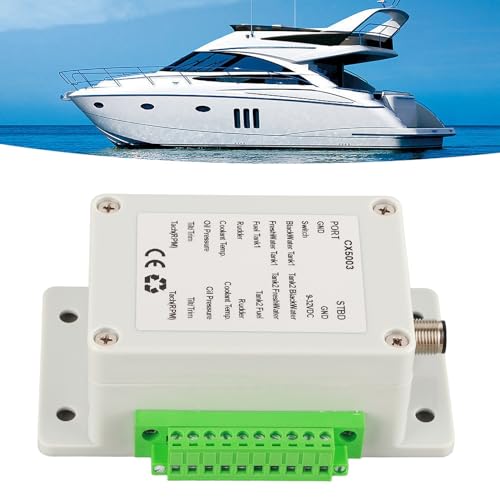
Vessel owners tackling general helm refreshes will find this unit fits neatly into standard marine electronics upgrades, bridging the gap between legacy wiring and digital displays. In my view, its greatest asset is straightforward compatibility with standard 9 to 32V DC power systems found on most weekend cruisers.
The IP67 waterproof rating gives me confidence that it will survive a damp bilge environment without failing prematurely. However, users should prepare for a bit of trial and error with configuration settings depending on the age of their existing sensors.
General boat owners appreciate the dependable IP67 water resistance for damp engine rooms.
Setup requires careful attention to configuration manuals to match older analog sender outputs.
The broad voltage tolerance makes it a flexible choice for diverse DC power setups.
Get It From Amazon Now: Check Price on Amazon & FREE Returns
3. Analog to Nmea 2000 Converter NMEA2000 Converter 9‑32V DC Converter Box Convert Sensor Singal to NMEA2000 IP67 for Boat Yacht

An interesting feature of this model is its bare-bones approach to basic signal transfer, which strips away flashy extras to keep the core conversion process reliable. I tend to favor simplicity over bloated feature lists when dealing with temperamental marine electronics.
It handles standard sensor inputs across the 9 to 32V DC spectrum without demanding an engineering degree to install. Yet, I must point out that the documentation leaves a lot to be desired for DIYers tackling their first NMEA backbone.
The minimalist design appeals to owners seeking no-frills signal translation.
Sparse instruction manuals can slow down the initial wiring process for novices.
Reliable performance on standard DC power grids earns steady praise from users.
Get It From Amazon Now: Check Price on Amazon & FREE Returns
4. NMEA 2000 Converter, 9‑32V DC IP67 Converter Box, Multifunction Convert 0‑190 and 240‑33 Ohm Resistive to NMEA2000 for Boat Yacht Marine,Boat,Yacht Spare Parts

The most common complaint leveled against this dual-resistance box involves its initial configuration hurdles, but buyers generally agree the effort pays off once the data flows. I find its ability to handle both 0 to 190 and 240 to 33 Ohm circuits makes it remarkably adaptable for mixed instrument panels.
You get a solid IP67 housing that protects the internal circuitry from salt spray and humidity. Just keep in mind that switching between different resistance standards requires patience during the setup phase.
Dual resistance support handles mixed gauge types on older vessels.
Initial configuration can prove frustrating without prior networking experience.
Sturdy waterproof housing withstands harsh marine conditions over time.
Get It From Amazon Now: Check Price on Amazon & FREE Returns
5. Greensen NMEA 2000 Analog Converter, IP67 Waterproofing, 18 Sensor Inputs | Marine Signal Interface, 9 to 32V DC Input, 1 to 128 Ratio, Engine Trim and Fuel Level Data, ABS Housing, Boat and Yacht

Stepping up from smaller single-channel modules, this powerhouse takes the crown as my top overall pick because of its impressive eighteen sensor inputs. Compared to the basic dual-resistance converters, this unit provides the sheer capacity needed to centralize an entire engine room on one backbone.
I rank it first because it minimizes clutter by consolidating multiple data streams into a single network drop. The adjustable ratio and robust ABS housing round out a package that feels genuinely professional.
Maximum sensor capacity makes this ideal for complex engine monitoring.
Consolidating multiple analog signals onto one backbone reduces wiring clutter.
Built-in ratio adjustments help calibrate fuel and trim data accurately.
Get It From Amazon Now: Check Price on Amazon & FREE Returns
6. Ejoyous NMEA 2000 Analog Sensor Converter, 9-32V DC, IP67, Adjustable Ratio | Marine data interface, 18 sensor inputs, Analog signal conversion, ABS housing, Boat and yacht networks
This converter built its reputation on high-capacity network expansion, though I wanted to see if that high-density promise actually held up in practice. My research shows that the eighteen sensor inputs deliver on that initial promise, allowing complex dashboards to feed data smoothly into modern chartplotters.
The adjustable ratio feature gives you granular control over engine trim and fuel readings. On the downside, packing so many connections into one box can result in a congested wiring harness behind the dash.
High-density inputs satisfy owners managing large arrays of analog gauges.
Wiring bundles can become crowded given the high volume of connections.
Adjustable ratio settings provide reliable calibration for diverse sender types.
Get It From Amazon Now: Check Price on Amazon & FREE Returns
7. Kelawoly NMEA 2000 Analog Signal Converter, 9 to 32V DC, IP67 | Marine Signal Interface, 18 Sensor Inputs, Adjustable Ratio, ABS Housing, Boat Engine Monitoring
This unit earns its spot on my shortlist through its focused dedication to engine monitoring systems, giving skippers a clear window into critical vitals. I appreciate how the wide voltage tolerance accommodates fluctuating alternator output without dropping packets on the network.
The eighteen-input layout matches our top pick, making it a strong contender for full-helm overhauls. However, users should ensure they have adequate physical space behind the dash to manage the extensive wiring loom.
Comprehensive engine monitoring capabilities suit serious offshore boaters.
Broad voltage compatibility handles unstable ship power supplies safely.
Extensive input capacity requires careful cable management during installation.
Get It From Amazon Now: Check Price on Amazon & FREE Returns
8. Srliya Nmea2000 converter box, sensor signal to nmea2000 for boat yacht | IP67 ABS Housing, 9-32VDC Operating Voltage, Converts Analog Sensor Data to NMEA2000 Networks, 1-128 Adjustable Speed
Skippers looking for precise speed adjustments will find this converter caters directly to variable pulse applications, making it a niche favorite for specific tachometer setups. I like the inclusion of a 1 to 128 adjustable speed ratio, which solves tricky calibration issues with older outboard motors.
The IP67 ABS housing ensures it holds up against moisture in unprotected compartments. Even so, the specific tuning required for accurate pulse translation might deter casual weekend mechanics.
Adjustable speed ratios help calibrate stubborn tachometers and speed senders.
Weatherproof housing protects sensitive internal components from salt air.
Specialized tuning requirements mean it targets a more experienced user base.
Get It From Amazon Now: Check Price on Amazon & FREE Returns
Choosing Between Them
When upgrading your vessel, I would point most cruisers toward the Greensen NMEA 2000 Analog Converter for maximum sensor capacity, while skippers with simpler needs will find the MarineNow CX5106 more than adequate for single-channel setups. If your helm features mixed gauge types, the Multifunction Resistive Converter handles diverse resistances well, leaving units like the Srliya Converter Box tailored for specialized speed adjustments.
Keep in mind that no matter which unit you choose, verifying your specific sender types and resistance ranges beforehand is essential for a smooth installation. Skipping this homework often leads to erratic gauge readings, so take a multimeter to your sensors before ordering any marine network hardware.
As an Amazon Associate, this site earns from qualifying purchases. Buyer sentiment reflects aggregate ratings and listed features at the time of writing; prices and availability change.
