

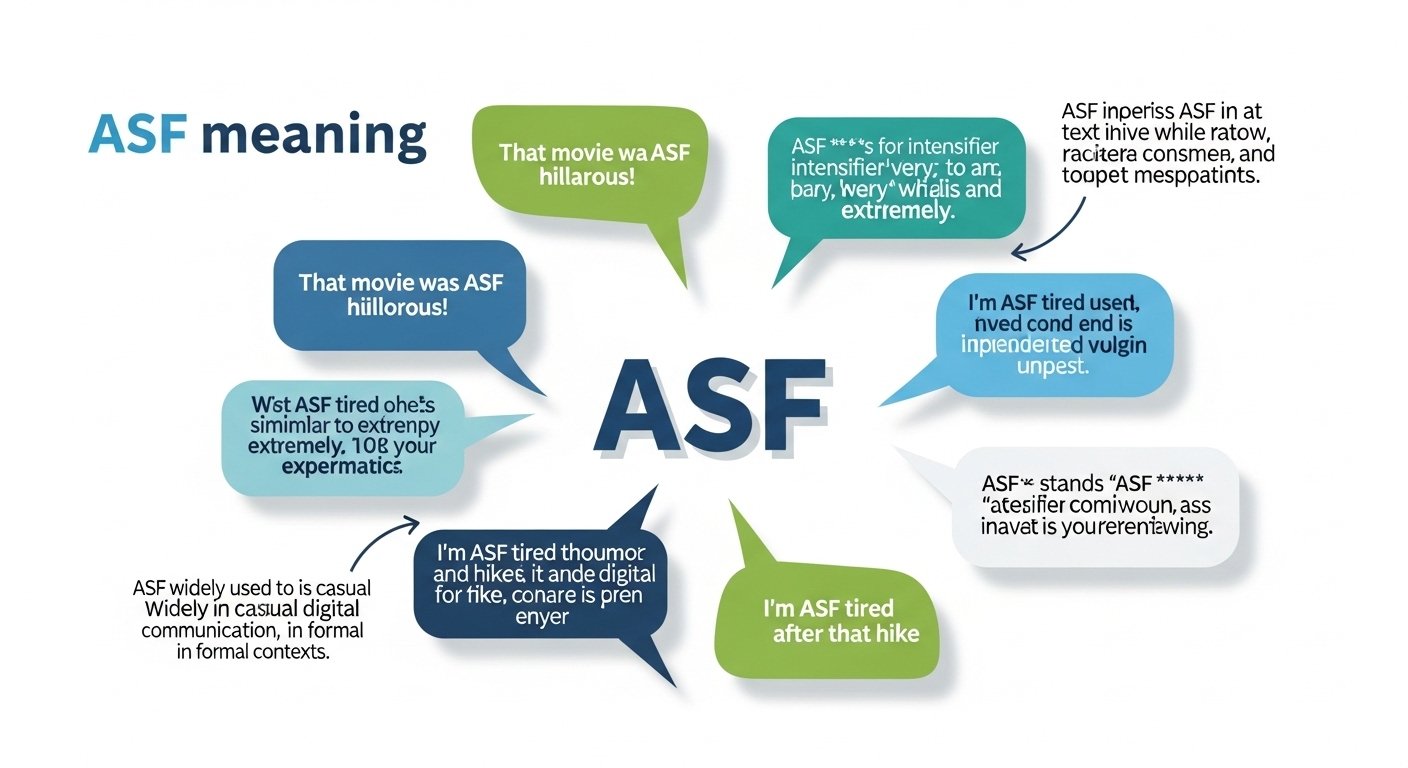
Ever seen someone type “asf” at the end of a message and just paused like… wait, what does that even mean? You’re not alone, honestly. The ASF meaning in text has confused a lot of people, especially if you’re not deep into modern internet slang or social media culture.
Here’s the simple truth: *ASF stands for “as f”**, and it’s used to add strong emotional intensity to whatever someone is saying. Sounds simple, right? But there’s actually way more going on beneath the surface, and understanding it properly can seriously level up how you read and write online conversations.
Let’s break it all down in a way that actually makes sense.
What Does ASF Mean in Text?
*ASF means “as f”**, and it works as an intensifier in informal communication. In plain words, it replaces “very” or “extremely,” but with a much stronger emotional punch.
ASF → stands for → “as f” (intensifier phrase)*
So instead of saying:
- “I’m very tired”
People say: - “I’m tired asf”
It’s shorter, more expressive, and honestly, feels more real when texting.
Here are quick examples you’ll see everywhere:
- “This food is good asf”
- “I’m bored asf rn”
- “That movie was sad asf”
Notice something? It almost always comes at the end. No complex grammar rules, just vibes and emotion.
Why ASF Became So Popular Online
ASF didn’t just randomly appear. It grew with the rise of text messaging language and social media platforms.
Social media platforms → popularized → ASF usage
Back in early texting days, people had limits. Less characters, faster typing, and yeah, sometimes avoiding explicit words. So “as f***” got shortened to “ASF.”
A few key reasons why it exploded:
- Short and fast: Perfect for quick texting
- Emotionally powerful: Adds instant intensity
- Relatable tone: Feels natural in casual chats
- Widely used by Gen Z and Millennials
Gen Z & Millennials → drive → adoption of internet slang like ASF
You’ll mostly find it on:
- Instagram captions
- TikTok comments
- Twitter/X posts
- Group chats
- Gaming chats
And once something trends there, it spreads everywhere.
How ASF Is Used in Daily Conversations
ASF is mainly used in informal communication. You won’t see it in emails or professional documents, and honestly, you shouldn’t use it there either.
ASF → is used in → informal digital communication
Here’s how people actually use it:
- To show excitement: “That song is fire asf”
- To express frustration: “This app is slow asf”
- To describe feelings: “I’m nervous asf”
- To react to something: “That was funny asf”
It acts like an emotional amplifier. Think of it like turning the volume knob all the way up.
The Real Emotional Power Behind ASF
Now this is where things get interesting. ASF isn’t just slang, it’s part of how people express emotion online.
ASF → adds → emotional intensity to statements
In digital communication, tone is tricky. You can’t hear someone’s voice or see their face. So people rely on words like ASF to fill that gap.
ASF helps people:
- Sound more honest
- Add personality to messages
- Show strong feelings quickly
- Feel more relatable
For example:
- “I’m happy” sounds flat
- “I’m happy asf” feels real
It’s subtle, but powerful.
ASF vs Other Similar Slang Terms
There are a few similar terms, but ASF has its own vibe. Here’s a quick comparison:
| Term | Meaning | Tone Level | Usage Style |
|---|---|---|---|
| ASF | As f* | Very strong | Casual, expressive |
| AF | As f* | Strong | Slightly shorter |
| Very | Formal intensifier | Neutral | Professional |
| Really | Mild emphasis | Soft | Everyday |
| So | Light emphasis | Low | Casual |
ASF is the most raw and expressive out of all of them. That’s why it stands out.
Common Mistakes People Make About ASF
A lot of people misunderstand ASF, and yeah, it can get awkward if you use it wrong.
Here are some common misconceptions:
- It’s always rude
Not true. It depends on context. With friends, it’s normal. In formal settings, it’s inappropriate. - It only expresses anger
Wrong again. It can show happiness, excitement, sadness, or even admiration. - It replaces adjectives
Nope. It only intensifies them, it doesn’t replace them. - Everyone is okay with it
Not really. Some people don’t like slang or swear-based expressions, so you gotta read the room.
When You Should (and Shouldn’t) Use ASF
This is where most guides kinda fall short, but let’s be real about it.
When ASF is okay to use
- Chatting with friends
- Social media captions
- Casual online conversations
- Texting people your age group
When to avoid ASF
- Professional emails
- Job applications
- Academic writing
- Talking to elders or formal audiences
Context matters more than you think
Using ASF in the wrong place can make you look unprofessional or even disrespectful. So yeah, it’s not just about knowing the meaning, it’s about knowing the situation.
ASF Across Cultures and Audiences
Here’s something most people ignore: slang doesn’t work the same everywhere.
Different cultures and age groups react differently to words like ASF. In some places, it’s normal. In others, it might feel offensive or too casual.
So before using ASF:
- Think about who you’re talking to
- Consider cultural sensitivity
- Adjust your tone accordingly
This is called audience awareness, and honestly, it’s a huge part of modern communication.
How Slang Like ASF Is Evolving
Internet slang changes fast, like really fast. What’s popular today might feel outdated tomorrow.
ASF is part of a bigger trend in online communication trends where people shorten phrases and add emotional depth.
Here are some related evolving slang terms:
- “FR” (for real)
- “ONG” (on God)
- “Lowkey” (slightly or secretly)
- “Highkey” (obviously or strongly)
These terms often work together. For example:
- “That movie was sad asf fr”
See how that stacks emotion? That’s modern texting language in action.
Why Understanding ASF Matters Today
Language is changing, and if you don’t keep up, you kinda get left behind. Not in a bad way, but you might miss the tone or intent behind messages.
Understanding ASF helps you:
- Avoid confusion in chats
- Read emotional tone correctly
- Communicate more naturally
- Stay connected with digital culture
And honestly, it just makes conversations smoother.
Because at the end of the day, language isn’t just words, it’s connection.
Real-Life Examples of ASF in Sentences
Let’s look at some natural examples you’ll actually see online:
- “This weather is hot asf”
- “I’m tired asf today”
- “That outfit is clean asf”
- “This game is hard asf”
- “I’m grateful asf for you”
Simple, direct, and full of emotion.
Final Thoughts on ASF Meaning in Text
The ASF meaning in text isn’t just about slang, it’s about how people express themselves in a fast-moving digital world. It adds intensity, personality, and a bit of raw honesty to everyday conversations.
Once you understand it, you’ll start noticing it everywhere. And yeah, you might even start using it yourself… just make sure you use it in the right place.
FAQs
What does ASF mean in text?
ASF means “as f*,” and it’s used to add strong emphasis to a sentence. It works like saying “very” or “extremely,” but in a more casual and expressive way commonly seen in texting and social media.
Is ASF a bad or offensive word?
ASF isn’t always offensive, but it includes a censored swear word. It’s fine in casual chats with friends, but should be avoided in formal or professional settings to maintain respect and appropriateness.
Where is ASF commonly used?
ASF is mostly used in text messages, social media platforms like Instagram and TikTok, and casual online conversations. It’s rarely used in formal communication or professional writing.
Can ASF be used in positive sentences?
Yes, ASF can be used in both positive and negative contexts. For example, “happy asf” shows excitement, while “tired asf” expresses exhaustion. It simply intensifies the emotion being described.
