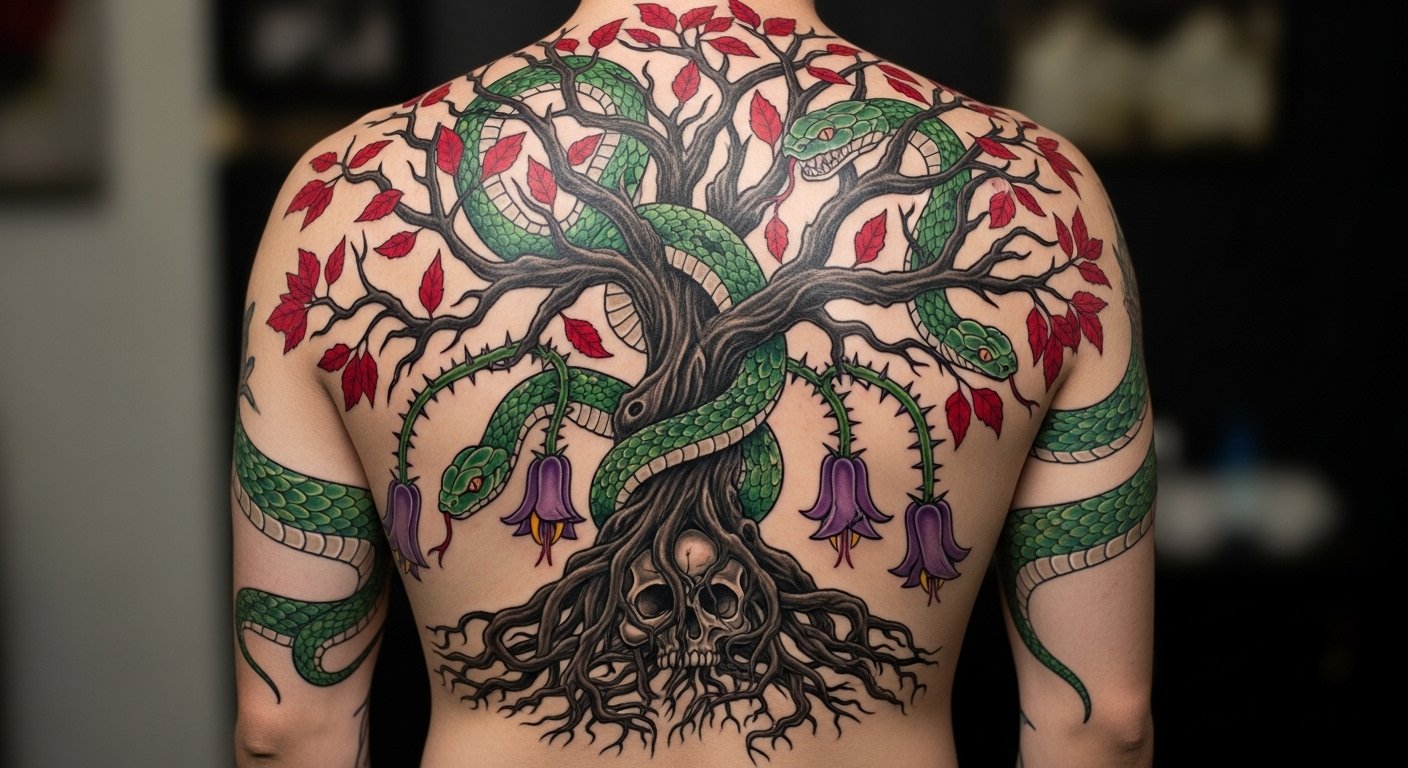
Ever felt like anger just sits inside you, growing quietly? That’s exactly where the poison tree tattoo meaning comes in. It’s not just dark body art—it’s a raw, honest reflection of suppressed emotions, hidden anger, and personal transformation. Inspired by A Poison Tree, this tattoo carries a story that feels uncomfortably real, yet powerful in a strange way.
People don’t choose this design randomly. They choose it because it speaks to something deep inside them something unresolved, maybe even painful. And honestly, that’s what makes it so meaningful.
What Does a Poison Tree Tattoo Symbolize?
A poison tree tattoo symbolizes suppressed emotions and hidden anger that grow silently over time. It reflects what happens when feelings aren’t expressed, they don’t disappear—they transform into something toxic.
Here’s the core idea broken down clearly:
- Poison tree tattoo → represents → suppressed emotions and hidden anger
- Suppressed emotions → lead to → internal toxicity and emotional damage
When you ignore your feelings, especially anger or betrayal, they don’t just vanish. They grow roots. The “tree” becomes a metaphor for everything you’ve buried inside.
You’ll often see meanings like:
- Resentment building over time
- Unspoken words turning toxic
- Betrayal and revenge symbolism
- Emotional pain that transforms into strength
It’s not just negative though. Many people wear this tattoo as a reminder to face their truth, even when it’s messy.
The Literary Origin: William Blake’s Influence
The meaning of this tattoo is deeply rooted in literature, specifically in William Blake’s famous poem.
What Happens in the Poem?
In simple terms, the poem tells a story:
- The speaker expresses anger toward a friend → it fades
- The speaker hides anger toward an enemy → it grows
Eventually, that hidden anger becomes a tree bearing poisonous fruit, leading to destruction.
- A Poison Tree → illustrates → consequences of unexpressed anger
Blake wasn’t talking about actual poison, obviously. He was talking about emotional damage. And honestly, that message still hits hard today.
Why It Matters for Tattoos
People who choose this tattoo often:
- Connect with the poem’s message
- Appreciate literary tattoo inspiration
- Want a design with deep intellectual meaning
It’s not just art, it’s storytelling on your skin.
Psychological Meaning Behind a Poison Tree Tattoo
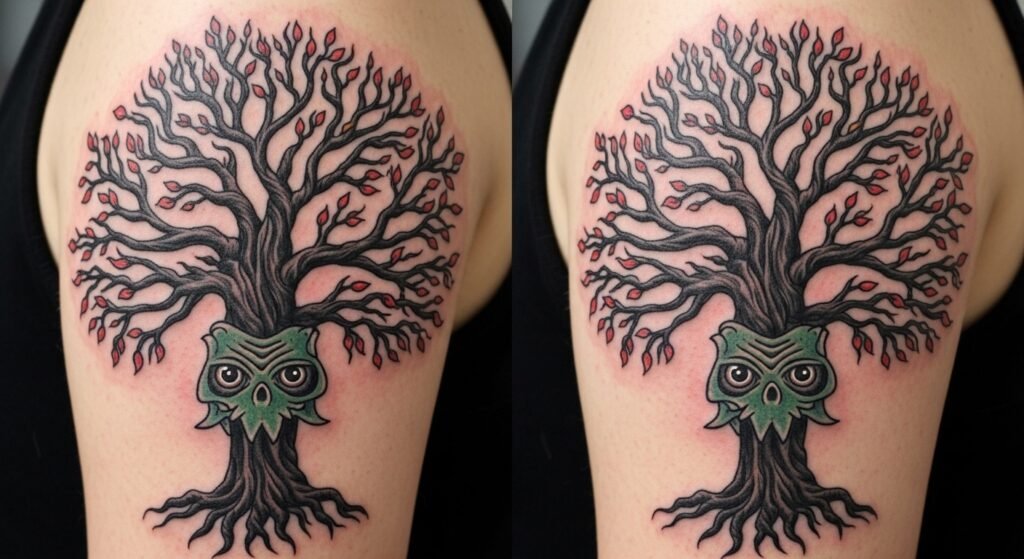
A poison tree tattoo reflects deep psychological processes, especially the concept of the shadow self introduced by Carl Jung.
- Shadow self → influences → personal transformation and self-awareness
This “shadow” is the part of you that hides anger, jealousy, or pain. Ignoring it doesn’t make it go away. It just grows stronger.
Emotional Functions of This Tattoo
People often get this tattoo for reasons like:
- A reminder to express emotions honestly
- A symbol of healing from trauma
- A marker of personal growth and self-awareness
- A warning against toxic emotional patterns
In a way, it’s like therapy, but permanent. And yeah, that’s kinda intense, but meaningful too.
Tree Tattoo Symbolism and Deeper Meaning
Tree tattoos in general carry universal symbolism. But when you add the “poison” element, things shift dramatically.
- Tree tattoo symbolism → reflects → growth, life, and subconscious connection
Here’s how it works:
| Element | Meaning |
|---|---|
| Roots | Subconscious emotions and hidden truths |
| Trunk | Connection between inner and outer self |
| Branches | Expression, actions, and choices |
| Poisoned Fruit | Consequences of suppressed anger |
A healthy tree represents growth. A poisoned one represents imbalance. It’s basically your emotional state turned into visual form.
Cultural Interpretations of the Poison Tree Symbol
Different cultures interpret this symbol in unique ways, which makes it even more interesting.
Western Perspective
Focuses on individual responsibility and emotional honesty, largely influenced by Blake’s poem.
Eastern Philosophy
In Buddhism, anger is seen as a poison itself. The tree becomes a symbol of karma and mindfulness.
Celtic Beliefs
Trees are sacred. A poisoned tree represents corruption of natural goodness.
Norse Mythology
Even the great world tree has dark roots, symbolizing balance between light and shadow.
It’s kinda fascinating how one symbol can mean so many things depending on where you look.
Poison Tree Tattoo Meaning for Men and Women
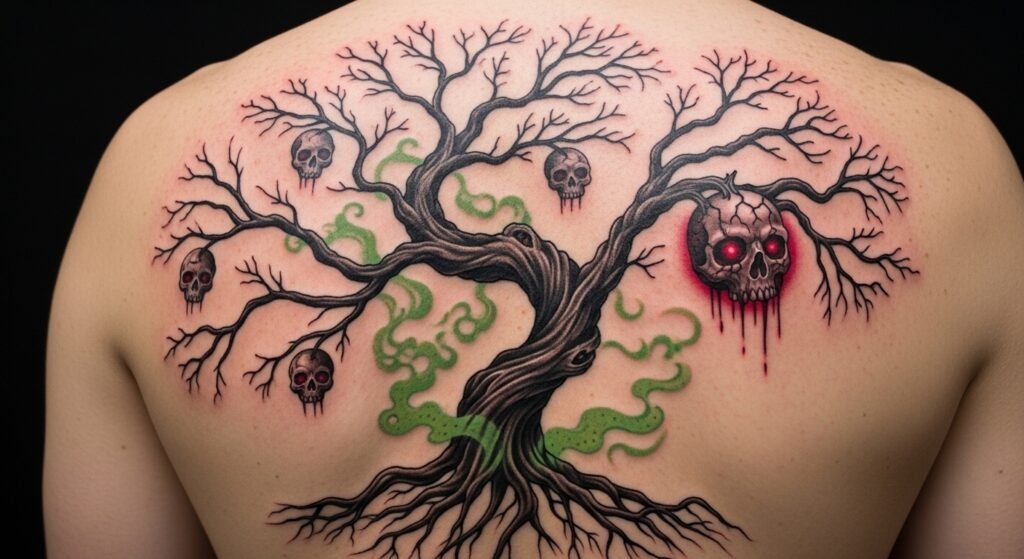
For Men
For many men, this tattoo represents breaking free from toxic masculinity.
- Encourages emotional openness
- Challenges “men don’t cry” mindset
- Symbolizes strength through vulnerability
Men often choose bold designs with darker tones, placed on the chest, back, or forearm.
For Women
For women, the meaning often shifts toward empowerment and emotional validation.
- Reclaiming suppressed anger
- Setting personal boundaries
- Transforming pain into strength
Designs may include softer elements like flowers or flowing branches, which adds contrast to the darker meaning.
Popular Poison Tree Tattoo Designs and Their Meanings
Different designs carry slightly different meanings. Here are some of the most popular ones:
- Bare Dead Tree
Represents emotional emptiness or burnout. It’s raw and honest, maybe even uncomfortable. - Tree with Poisoned Fruit
Direct reference to Blake’s poem. Symbolizes temptation and consequences. - Weeping Willow Style
Combines sadness with beauty. Often linked to grief and healing. - Tree with Exposed Roots
Focuses on hidden emotional foundations. What’s beneath matters more than what’s visible. - Split or Lightning-Struck Tree
Represents sudden trauma or life-changing events.
Color Symbolism Table
| Color Style | Meaning |
|---|---|
| Black & Grey | Serious, timeless, introspective |
| Red Accents | Anger, passion, intensity |
| Dark Green | Natural, grounded, emotional depth |
| Watercolor | Fluid emotions, artistic expression |
Color actually matters more than people think. It changes the entire vibe of the tattoo.
Is the Poison Tree Tattoo a Negative Symbol?
Short answer: No, it’s not purely negative.
This tattoo doesn’t celebrate darkness. It acknowledges it. And that’s a big difference.
People often assume dark tattoos mean negative personality traits, but that’s not true. In fact:
- Facing your emotions → leads to → healing and growth
- Ignoring emotions → leads to → deeper internal conflict
So yeah, it’s more about awareness than negativity.
Design Elements, Placement, and Size Symbolism (Topical Gap Covered)
Most articles barely touch this, but design details matter a lot.
Size Meaning
- Small tattoos → personal, private struggles
- Large tattoos → bold statement, visible transformation
Placement Meaning
- Forearm → openness and communication
- Chest → deep emotional connection
- Back → hidden struggles or past experiences
- Ribs/Thigh → personal, intimate meaning
Design Elements
- Skulls → mortality and consequences
- Snakes → transformation and danger
- Ravens → mystery and intelligence
Every detail adds a layer of meaning, and honestly, skipping this part would miss half the story.
Real-Life Meaning and Personal Stories (Topical Gap Covered)
One thing most content misses is the human side.
People don’t just get this tattoo because it looks cool. They get it because:
- They survived toxic relationships
- They learned to express emotions
- They went through personal transformation
For example, someone who bottled anger for years might choose this tattoo as a reminder: never again. It becomes a symbol of growth, not just pain.
And yeah, those stories matter more than any generic meaning.
Should You Get a Poison Tree Tattoo?
Before getting one, ask yourself a few honest questions:
- Does this symbol truly resonate with you?
- Are you choosing it for meaning, not just aesthetics?
- Will it still matter to you years from now?
Getting a tattoo is permanent. Removal is expensive and painful. So don’t rush it.
Good Reasons to Get One
- Deep emotional connection
- Appreciation for literature and symbolism
- Desire for meaningful self-expression
Reasons to Wait
- Following trends
- Feeling unsure about the meaning
- Pressure from others
Take your time. The best tattoos aren’t rushed decisions.
FAQ Section
What does a poison tree tattoo symbolize?
A poison tree tattoo symbolizes suppressed anger, hidden resentment, and emotional toxicity. It reflects how unexpressed feelings grow over time and impact mental and emotional well-being, often serving as a reminder to face emotions honestly.
Is the poison tree tattoo based on a real story?
Yes, it’s inspired by A Poison Tree. The poem illustrates how hidden anger can grow destructively, making it a powerful literary foundation for this tattoo’s meaning.
Is this tattoo only for negative emotions?
No, it’s not just negative. It represents awareness, healing, and personal growth. Many people use it as a symbol of overcoming emotional struggles and learning healthier ways to express feelings.
Where is the best placement for a poison tree tattoo?
Popular placements include the forearm, chest, back, ribs, and thigh. The best placement depends on how visible you want the tattoo and how personal the meaning is to you.

Tonyjames is an expert blogger specializing in grammar, helping readers write with clarity and confidence. With a keen eye for detail and a passion for language, he simplifies complex rules into practical tips you can apply every day to improve your writing skills.