
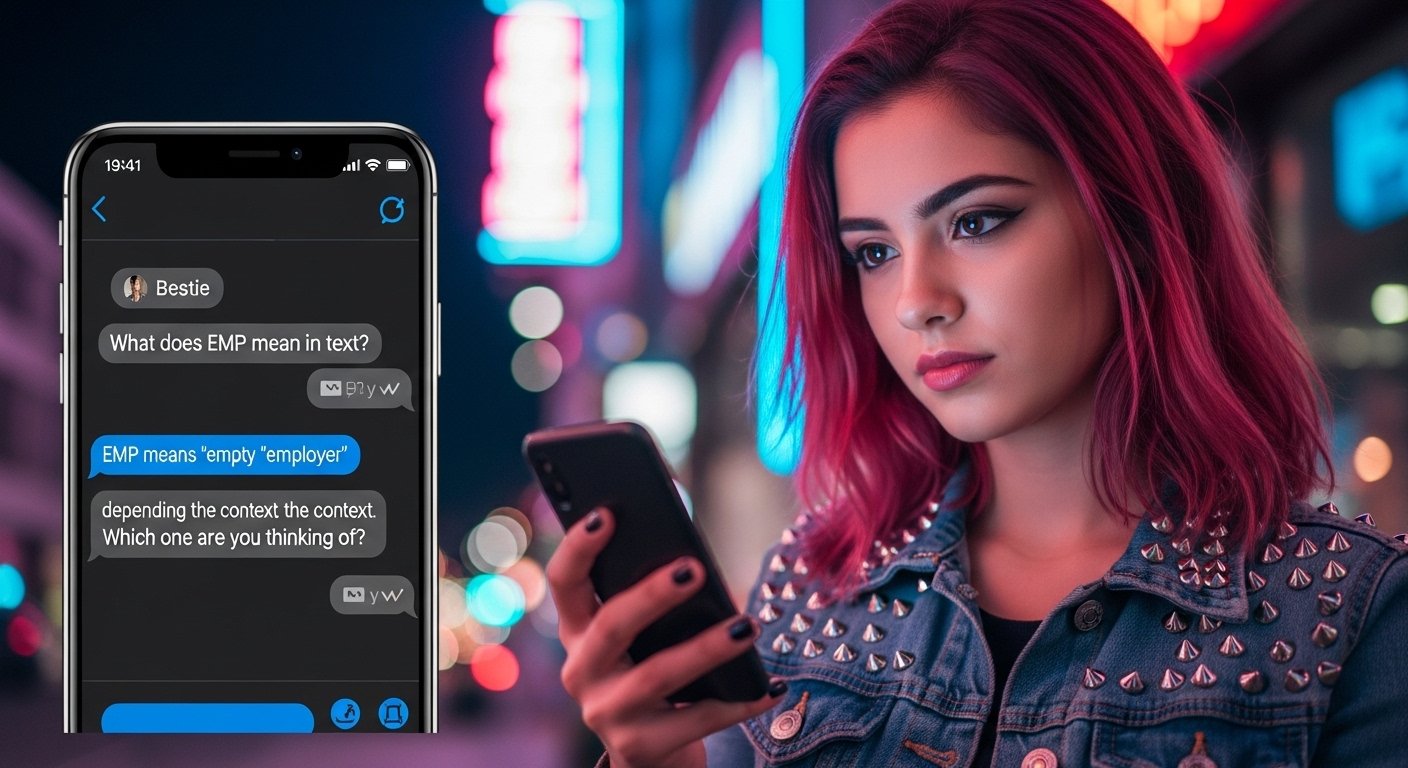
You just saw “EMP” in a message from a girl, and now you’re stuck wondering what she really meant. Don’t worry, you’re not alone here. The phrase EMP meaning in text from a girl has become a trending curiosity because modern texting isn’t just about words—it’s about tone, emotion, and subtle signals that can easily get missed.
In today’s fast-moving Gen Z texting culture, acronyms like EMP carry layered meanings. One small word can show care, highlight seriousness, or even build emotional connection without saying much. So yeah, understanding it properly can actually improve how you communicate, especially in chats that matter.
What Does EMP Mean in Text From a Girl?
EMP in texting typically means “Emphasize” or “Empathy.”
The exact meaning depends on context, tone, and the emotional vibe of the conversation.
When a girl uses EMP, she’s usually doing one of these:
- Highlighting something important (Emphasize)
- Showing emotional understanding (Empathy)
- Supporting you without writing long paragraphs
EMP → represents → Emphasize or Empathy
This dual meaning is what makes it powerful but also confusing sometimes.
For example:
“I’m EMP serious, get some rest.” → emphasis
“EMP, I understand what you’re going through.” → empathy
You see the difference? Same word, totally different energy.
Why Girls Use EMP in Texting
Girls often use emotional shorthand in chats, and EMP fits perfectly into that space. It’s short, expressive, and carries meaning without effort. Honestly, it just feels more natural in soft conversations.
EMP → conveys → emotional tone (support, care, emphasis)
This is why it appears more in emotionally aware communication styles.
Here’s why it’s popular:
- Saves time while expressing depth
- Matches soft texting style trends
- Feels warm and supportive
- Works well in both casual and emotional chats
Also, platforms like TikTok, Instagram, and Snapchat have pushed these kinds of expressions into mainstream texting.
EMP Meaning Based on Context
Context decides everything. Without context, EMP can easily confuse you.
Casual Conversations
In casual chats, EMP usually means emphasize.
Example:
“EMP that movie was insane 😂”
Here, she’s just stressing her reaction. Nothing deep, just excitement.
Emotional or Supportive Chats
In emotional texting, EMP shifts toward empathy.
Example:
“EMP, I know things have been hard lately.”
Now it’s about emotional connection and support.
Romantic or Flirty Conversations
In romantic chats, EMP becomes softer and more meaningful.
Example:
“EMP, you deserve better honestly 💛”
This can signal care, and sometimes, subtle affection too.
Social Media Usage
On social media, EMP is used in captions or comments.
Example:
“Stay strong. EMP 💕”
Social media platforms → drive → slang adoption like EMP
That’s why you see it everywhere now.
EMP Usage Table (Quick Reference)
| Context | Meaning | Example |
|---|---|---|
| Casual Texting | Emphasize | “EMP that’s funny 😂” |
| Emotional Chat | Empathy | “EMP, I get you.” |
| Romantic Chat | Emotional bond | “EMP, you matter to me.” |
| Social Media | Supportive vibe | “Life goes on. EMP 💛” |
Real-Life Chat Examples (So You Get It Clearly)
Let’s break it down in real-life style, because theory alone isn’t enough.
Casual:
“EMP, that was wild 😂”
She’s reacting strongly, nothing emotional here.
Supportive:
“You’ve been dealing with a lot. EMP, I’m here.”
Now she’s showing emotional awareness.
Flirty:
“EMP, you always know how to make me smile 😊”
This has a soft romantic tone, not too obvious but still meaningful.
How to Respond to EMP the Right Way
Your response matters more than you think. If you respond wrong, the vibe breaks instantly.
Casual Replies
- “Haha EMP fr 😂”
- “Same here EMP”
Emotional Replies
- “Thanks, that really means a lot.”
- “EMP, I appreciate you saying that.”
Soft/Flirty Replies
- “Aww EMP, that’s sweet of you”
- “EMP, I like how you understand me”
Professional Situations (Avoid EMP)
Instead of using EMP, say:
- “I understand your point.”
- “I want to emphasize this.”
Because yeah, online communication etiquette matters in formal spaces.
When EMP Can Be Misunderstood
Here’s where things get tricky. Not everyone knows what EMP means.
Misinterpretation of EMP → leads to → communication confusion
Common misunderstandings:
- Thinking it means “Empty”
- Confusing it with Electromagnetic Pulse (yeah, like in movies)
- Missing emotional tone completely
Example:
Girl: “EMP, I understand you.”
You: “Empty?? What?”
That’s awkward, honestly.
EMP vs Other Texting Acronyms
EMP isn’t alone. It exists alongside other popular texting acronyms Gen Z uses daily.
| Term | Meaning | Tone | Usage Area |
|---|---|---|---|
| EMP | Empathy/Emphasize | Soft/Caring | Emotional chats |
| FR | For Real | Direct | Casual texting |
| ONG | On God | Strong | TikTok/gaming |
| IDK | I Don’t Know | Neutral | Everywhere |
EMP → is used in → Gen Z texting culture
But unlike others, it leans more toward emotional intelligence.
Usage in Dating Apps & Modern Chats
On apps like Bumble, Tinder, and Hinge, EMP plays a subtle but powerful role.
Girls use it to:
- Show emotional awareness
- Build connection without being too direct
- Keep conversations soft and engaging
Example:
“EMP, breakups really do suck.”
It’s not flirting directly, but it creates emotional closeness.
Psychological Insight: Why Girls Use EMP More Often
This is where most articles don’t go deep, but it actually matters a lot.
Girls often communicate using emotion-first language. Instead of stating facts, they express feelings or validate yours. EMP fits perfectly into that behavior.
Here’s what’s happening psychologically:
- It signals emotional intelligence
- It builds trust quickly
- It avoids over-explaining feelings
- It creates a “safe space” in conversation
In simple words, EMP is not just slang—it’s a tool for connection.
Before vs After Using EMP in Conversations
Let’s compare real impact, so you really understand it.
Without EMP
“I understand what you’re saying.”
Feels okay, but a bit formal or distant.
With EMP
“EMP, I understand you.”
Feels warmer, more human, more real.
See the shift? It’s small, but powerful.
This is why digital communication trends are evolving toward emotional shorthand.
Regional Differences You Should Know
EMP isn’t used the same way everywhere.
- In the US/UK: Mostly means empathy
- In Canada/Australia: Often used for emphasis
- In South Asia: Less common, can confuse people
Example:
Girl: “EMP, I get you.”
You: “EMP??”
So yeah, always consider cultural context.
Should You Use EMP Back?
Short answer: Yes, but carefully.
Use EMP when:
- The conversation is casual
- You’re matching her tone
- It feels natural
Avoid it when:
- You’re in professional communication
- You’re unsure of its meaning
- The tone is serious or formal
Texting tone and context → determine → correct usage of EMP
If it feels forced, don’t use it. Simple.
Common Mistakes to Avoid
Even though EMP looks simple, people mess it up often.
- Overusing it in every message
- Using it in formal emails
- Misreading emotional tone
- Ignoring emojis that clarify meaning
Example mistake:
“You’re being dramatic EMP”
That sounds rude, even if you didn’t mean it.
Tone matters. Always.
FAQ Section
What does EMP mean in text from a girl emotionally?
EMP usually expresses empathy, care, or emotional support. When a girl uses it, she’s often trying to connect with your feelings or show understanding. It’s more about emotional bonding than literal meaning, so always read it with context.
Does EMP mean she likes me?
Not necessarily. EMP shows care and emotional awareness, but it doesn’t always mean romantic interest. However, if it’s used frequently with soft language and emojis, it could indicate deeper feelings. Context and consistency matter more than the word itself.
Is EMP a common slang term?
EMP is moderately popular in Gen Z texting, especially on social media and dating apps. It’s not as widespread as terms like “LOL” or “IDK,” but it’s growing due to emotional communication trends.
Should I reply with EMP too?
Yes, you can—but only if it feels natural. Matching her tone is important in texting. If she uses EMP casually or emotionally, you can mirror it. In formal or unclear situations, it’s better to use full words instead.

Tonyjames is an expert blogger specializing in grammar, helping readers write with clarity and confidence. With a keen eye for detail and a passion for language, he simplifies complex rules into practical tips you can apply every day to improve your writing skills.