
Ever received a simple “yw” after saying thanks and paused, thinking… was that warm or kinda dry? You’re not alone. The YW meaning in text seems obvious at first, but in real digital communication, tone can get tricky. One tiny abbreviation can feel friendly, rushed, or even confusing depending on how it’s used.
In today’s fast-moving texting language, short replies dominate conversations. And yeah, sometimes they create more questions than answers. So if you want to truly understand what “yw” means, when to use it, and when to avoid it, you’re in the right place.
What Does YW Mean in Text?
YW means “You’re Welcome.” That’s the direct and simple answer.
In modern online conversations, people use “yw” as a quick reply after someone says “thanks” or “thank you.” It’s part of everyday internet slang, especially in informal chats.
Here’s the core relationship you should remember:
YW → means → You’re Welcome
This abbreviation exists because text abbreviations → improve → communication speed. People want fast replies, not long sentences. And honestly, most of the time, that’s totally fine.
Quick Examples
- “Thanks for the help!” → “yw 😊”
- “Appreciate it!” → “yw”
- “Thanks bro” → “yw 👍”
Notice something? The meaning stays the same, but tone changes slightly depending on emojis or extra words.
Why YW Exists in Texting Culture
The rise of SMS texting and early chat systems changed how we communicate. Back then, typing full phrases took effort, so people shortened everything.
This led to:
- “thanks” → “thx”
- “okay” → “k”
- “you’re welcome” → “yw”
Over time, these shortcuts became normal in chat platforms like WhatsApp, Messenger, and Instagram DMs. Now, they’re not just shortcuts—they’re habits.
Here’s another important semantic idea:
Text abbreviations → reflect → modern communication style
So no, “yw” isn’t lazy. It’s efficient. But yeah, efficiency sometimes sacrifices emotional clarity, and that’s where things get interesting.
How YW Is Used in Daily Digital Communication
YW is used in casual conversations across different platforms and situations. But the context really matters.
Common Usage Situations
- Casual chats with friends
- Family conversations
- Group chats or online gaming
- Social media replies
- Informal workplace messaging
In all these cases, “yw” works because the tone is already relaxed.
But here’s the key idea:
Context → determines → emotional interpretation of YW
So the same “yw” can feel totally different depending on who sends it and how.
Tone Matters: Is YW Friendly or Rude?
At its core, YW is neutral to positive. But tone in texting is tricky because you don’t hear voice or see expressions.
Tone Variations
| Format | Perception |
|---|---|
| yw 😊 | Warm and friendly |
| yw 👍 | Casual and positive |
| yw | Neutral |
| yw. | Can feel cold or final |
Here’s the key relationship:
Emojis → influence → tone of messages
Without emojis, “yw” can feel a bit dry. Add a smiley, and suddenly it feels human again.
Honestly, it’s kinda funny how one emoji changes everything, right?
Emotional Meaning Behind YW
Even though YW (text abbreviation) is simple, its emotional impact depends on delivery.
Positive Interpretations
- Friendly and polite
- Quick acknowledgment
- Signals familiarity
Possible Negative Interpretations
- Feels rushed
- Lacks warmth
- Seems dismissive in sensitive chats
So yeah, if someone sends just “yw” after a deep conversation, it might feel off. But in quick chats, it’s totally normal.
YW vs Other Texting Replies
Not all polite replies feel the same. Choosing the right one depends on tone, context, and relationship.
Comparison Table
| Phrase | Tone | Best Use Case |
|---|---|---|
| You’re welcome | Neutral/formal | Professional or polite chats |
| YW | Casual | Quick informal replies |
| No problem | Friendly | Everyday conversations |
| Anytime | Warm | Close relationships |
| NP | Very casual | Friends and peers |
Each option carries a slightly different emotional weight. So yeah, picking the right one shows social awareness.
When You Should Use YW (And When You Shouldn’t)
Use YW When:
- You’re in casual conversations
- Speed matters more than tone
- You’re chatting with friends or peers
Avoid YW When:
- In formal emails
- In professional client communication
- During emotional or serious discussions
Here’s a critical insight most people miss:
YW → is used in → casual conversations
Using it outside that context can make you seem careless, even if you didn’t mean it that way.
Common Misunderstandings About YW
A lot of people misinterpret short replies, especially in digital communication.
Let’s clear a few myths:
- “YW is rude” → Not true, it’s neutral
- “YW shows no effort” → It shows efficiency
- “Only teenagers use it” → Adults use it daily
- “YW means someone is annoyed” → Only if context supports it
Most confusion comes from overthinking. And yeah, we all do that sometimes.
Real-Life Examples of YW in Text
Understanding examples helps you see how texting language actually works.
- “Thanks for helping me!” → “yw 😊”
- “Appreciate the quick reply” → “yw”
- “Thanks for waiting” → “yw, no worries”
- “Thanks for explaining that” → “yw, glad it helped”
These examples show how adding small words or emojis changes the vibe.
Why Understanding YW Matters in Modern Communication
Today, most conversations happen through screens. That means tone is often guessed, not heard.
Here’s why understanding YW meaning in text matters:
- Helps you avoid misunderstandings
- Improves your communication confidence
- Makes you sound socially aware
- Strengthens online relationships
In simple terms, small words carry big meaning in online conversations.
YW vs NP vs Anytime: Deeper Comparison (Topical Gap Covered)
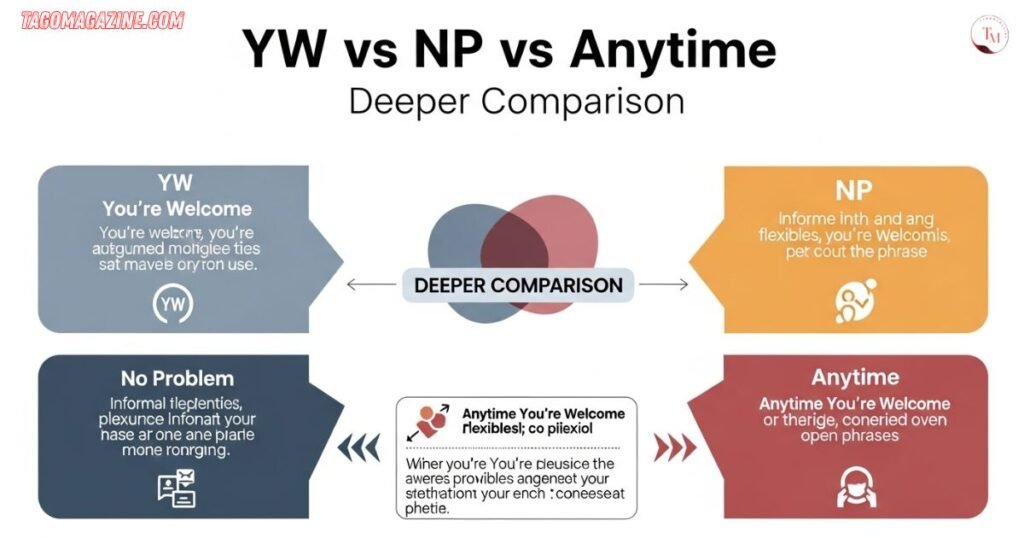
Most articles don’t explain this properly, but these replies aren’t interchangeable.
Key Differences
- YW → Neutral, efficient
- NP (No Problem) → Reassuring, friendly
- Anytime → Warm and open
Example:
- Boss says “Thanks for the report” → “You’re welcome” (better than “yw”)
- Friend says “Thanks for the ride” → “np” or “yw 😊” works fine
- Close friend says “Thanks for always helping” → “anytime” feels more genuine
So yeah, emotional context changes everything.
When NOT to Use YW (Professional & Cultural Context)
This is where most people mess up a little.
Avoid YW In:
- Formal emails
- Job interviews
- Customer service responses
- Cross-cultural communication (where tone matters more)
Why? Because informal communication → may reduce → perceived professionalism
In professional settings, full phrases like “You’re welcome” or “Glad to help” feel more respectful.
Also, in some cultures, short replies can feel abrupt. So it’s always smart to adapt based on who you’re talking to.
Final Thoughts: Keep It Simple, But Smart
At the end of the day, YW meaning in text is simple—it means “You’re Welcome.” But how it feels depends on context, tone, and delivery.
So next time you see “yw,” don’t overthink it too much. It’s usually just a quick, polite reply. But when you’re the one typing it, maybe think for a second—should you add an emoji or a few extra words?
Small changes make a big difference. And yeah, that’s how modern texting culture works.
FAQs
What does YW mean in text?
YW means “You’re welcome.” It’s a short and casual way to respond when someone thanks you. People use it mostly in informal chats where quick replies are preferred over full sentences.
Is YW rude or polite?
YW is generally neutral to polite. However, tone depends on context. Adding emojis makes it feel friendly, while a plain “yw” might feel slightly cold in emotional or serious conversations.
Can I use YW in professional communication?
It’s better to avoid using YW in formal or professional settings. Instead, use full phrases like “You’re welcome” or “Glad to help” to sound more polite and professional.
Why do people use YW instead of You’re Welcome?
People use YW because it’s faster and fits modern texting habits. It helps keep conversations quick and efficient, especially on messaging apps and social media platforms.

Tonyjames is an expert blogger specializing in grammar, helping readers write with clarity and confidence. With a keen eye for detail and a passion for language, he simplifies complex rules into practical tips you can apply every day to improve your writing skills.